
Liposuction in Iran: Complete Guide for International Patients
Liposuction in Iran
Liposuction in Iran is a popular medical tourism option for international patients seeking body contouring at a lower cost than in Western countries. Iran offers experienced plastic surgeons, modern private clinics, and several liposuction techniques, including VASER, laser-assisted, and power-assisted liposuction. Patients typically combine treatment with coordinated travel and aftercare support.
What Is Liposuction?
Liposuction is a surgical procedure that removes stubborn fat deposits from specific areas of the body. A plastic surgeon uses a thin tube called a cannula to break up and suction out fat cells, reshaping the treated area. Liposuction is not a weight-loss method; rather, it is designed to sculpt and refine body contours that have resisted diet and exercise.
Why Consider Liposuction in Iran?
Iran has become a recognised destination for cosmetic surgery, attracting patients from the Middle East, Europe, and beyond.
Experienced Plastic Surgeons
Iranian plastic surgeons often train internationally and perform a high volume of cosmetic procedures each year, giving them substantial hands-on experience with liposuction and related body contouring surgeries.
Access to Modern Medical Facilities
Many private hospitals and cosmetic surgery clinics in Iran are equipped with up-to-date surgical technology, meeting international standards for safety and hygiene.
Different Liposuction Techniques
Clinics in Iran typically offer a range of liposuction methods, allowing surgeons to tailor the approach to each patient’s body type and goals.
Medical Tourism Services for International Patients
Dedicated medical tourism facilitators help international patients with travel arrangements, translation, accommodation, and coordination between the clinic and the patient, making the process more straightforward for those travelling from abroad.
Types of Liposuction Available in Iran
Traditional (Suction-Assisted) Liposuction
This classic method uses a cannula connected to a vacuum device to manually remove fat. It remains a reliable choice for many body areas.
VASER Liposuction
VASER uses ultrasound energy to liquefy fat before removal, which can help preserve surrounding tissue and improve precision in contouring.
Power-Assisted Liposuction (PAL)
PAL uses a motorised cannula that vibrates rapidly, making it easier for surgeons to break up fat, particularly in fibrous areas such as the back.
Laser-Assisted Liposuction
This technique uses laser energy to melt fat cells before suction, and may also stimulate some skin tightening in the treated area.
Ultrasound-Assisted Liposuction
Similar in principle to VASER, this method uses ultrasonic energy to break down fat deposits, often used for denser fat areas.
How Much Does Liposuction Cost in Iran?
One of the main reasons international patients consider liposuction in Iran is the availability of cosmetic surgery at comparatively affordable prices. Iran offers different liposuction techniques, experienced plastic surgeons, and private medical facilities that provide body contouring procedures for both domestic and international patients. The cost of liposuction in Iran depends on several factors, including the surgeon’s experience, the treatment areas, the surgical technique, hospital facilities, anesthesia, and postoperative care. Compared with many Western countries, the advertised prices in Iran can be considerably lower. However, patients should compare the complete treatment package rather than looking at the surgical fee alone.
Average Liposuction Cost in Iran
The average cost of liposuction in Iran varies depending on the treatment area, the number of areas treated, and whether procedures are combined. Indicative 2026 prices for international patients range from around $800 for double chin liposuction to $4,800 for combined procedures such as Lipo 360 with a tummy tuck. Single-area treatments — including the upper arms, abdomen and flanks, thighs, and back — generally fall between $1,100 and $2,900, while combination procedures such as Lipo 360, Lipo 360 + BBL, and Lipo 360 + tummy tuck are priced higher. These are indicative estimates rather than guaranteed prices. The final cost is determined after an individual medical assessment. Here is an overview of indicative prices by procedure:
| Procedure | Estimated price (USD) |
|---|---|
| Double chin liposuction | $800–$1,100 |
| Upper arms | $1,100–$1,400 |
| Abdomen and flanks | $1,600–$2,900 |
| Thigh liposuction | $1,300–$1,800 |
| Back liposuction | $1,200–$1,900 |
| Lipo 360 (abdomen, waist and back) | $2,200–$4,000 |
| Lipo 360 + BBL | $2,600–$4,600 |
| Lipo 360 + tummy tuck | $2,800–$4,800 |
Factors Affecting Liposuction Prices
The cost of liposuction in Iran can vary significantly from one patient to another. Several medical and practical factors influence the final price.
The number of body areas being treated is one of the most important pricing factors. Treating one localized area generally costs less than performing liposuction on several areas during the same operation. Common treatment areas include the abdomen, waist and flanks, thighs, upper arms, back, chin and neck, and the male chest.
- Abdomen
- Waist and flanks
- Thighs
- Upper arms
- Back
- Chin and neck
- Male chest
The type of liposuction technique also plays a role, as different methods require different equipment, surgical expertise, and operating procedures — advanced technologies such as VASER may involve additional equipment-related costs. The surgeon’s experience and qualifications are another key factor; a surgeon’s medical credentials, specialist training, experience in body contouring, and professional reputation can all influence the total procedure cost, and patients should prioritize these qualities rather than choosing based on price alone. Hospital and operating room fees — including the surgical facility, nursing services, and postoperative monitoring — also contribute to the final cost. Anesthesia and medical requirements, such as preoperative laboratory tests, medical examinations, and additional health assessments, may further affect the quotation. Finally, the complexity of the procedure matters: extensive treatments such as 360-degree liposuction or high-definition body contouring typically require longer operating times and more detailed surgical planning, which is reflected in the overall cost.
What Is Included in a Liposuction Package?
For international patients considering liposuction in Iran, understanding what is included in the treatment package is essential. Medical tourism providers may offer different packages depending on the hospital, surgeon, and level of assistance required. A comprehensive liposuction package may include an initial online consultation, a review of medical history and photographs, a plastic surgeon consultation, preoperative medical examinations and laboratory tests, anesthesia fees, hospital or operating room expenses, the liposuction procedure itself, postoperative medical monitoring, compression garments, prescribed medications, follow-up consultations, wound care, airport pickup and transportation, hotel accommodation, hospital transfers, translation and interpretation services, and ongoing international patient coordination.
Medical and Surgical Services
- Initial online consultation
- Review of medical history and photographs
- Plastic surgeon consultation
- Preoperative medical examinations and laboratory tests
- Anesthesia fees
- Hospital or operating room expenses
- Liposuction procedure
- Postoperative medical monitoring
Postoperative Care
- Compression garments
- Prescribed postoperative medications
- Follow-up consultations
- Wound care and dressing changes
- Postoperative instructions and recovery guidance
International Patient Services
- Airport pickup and transportation
- Hotel accommodation
- Hospital transfers
- Translation and interpretation services
- International patient coordination
- Assistance with medical appointments
Before booking, international patients should request an itemized quotation that clearly identifies which services are included and what will be charged separately. Airfare, extra accommodation nights, treatment of any complications, and additional medical procedures are typically not covered in the standard package and should be verified independently before committing to a provider.
Comparing Liposuction Costs in Iran and Other Countries
Liposuction in Iran is considerably more affordable than in many other countries. Based on 2026 indicative prices, costs range from around $800 for double chin liposuction to $4,800 for combination procedures such as Lipo 360 with a tummy tuck. The table below shows how Iran compares with other popular destinations:
| Country | Indicative Liposuction Cost |
|---|---|
| Iran | $800–$4,800 |
| Turkey | €2,600–€5,200 |
| United Kingdom | £3,000–£8,500 |
| United States | $4,711 average surgeon’s fee |
Important: These figures are not directly equivalent packages. Iran’s prices range from $800 for double chin liposuction to $4,800 for combination procedures such as Lipo 360 with a tummy tuck, while the US figure represents the average surgeon’s fee reported by the American Society of Plastic Surgeons and excludes anesthesia and operating room expenses, and the UK figure is an indicative price range that may not reflect the same scope of services. Country prices also differ in the number of treated areas and what is included in the quoted cost. When comparing destinations, international patients should weigh several key factors: the surgeon’s qualifications and experience, hospital facilities and patient safety standards, the type of liposuction technique offered, the number of treatment areas, anesthesia and hospitalization expenses, postoperative care and follow-up arrangements, and the level of accommodation and medical travel support provided. Ultimately, the most appropriate destination should be chosen by comparing the quality, safety, and total cost of the proposed treatment — not price alone. For patients considering body contouring abroad, Iran may offer an affordable alternative, provided the surgeon and medical facility meet the necessary professional and safety requirements.
Which Body Areas Can Be Treated with Liposuction?
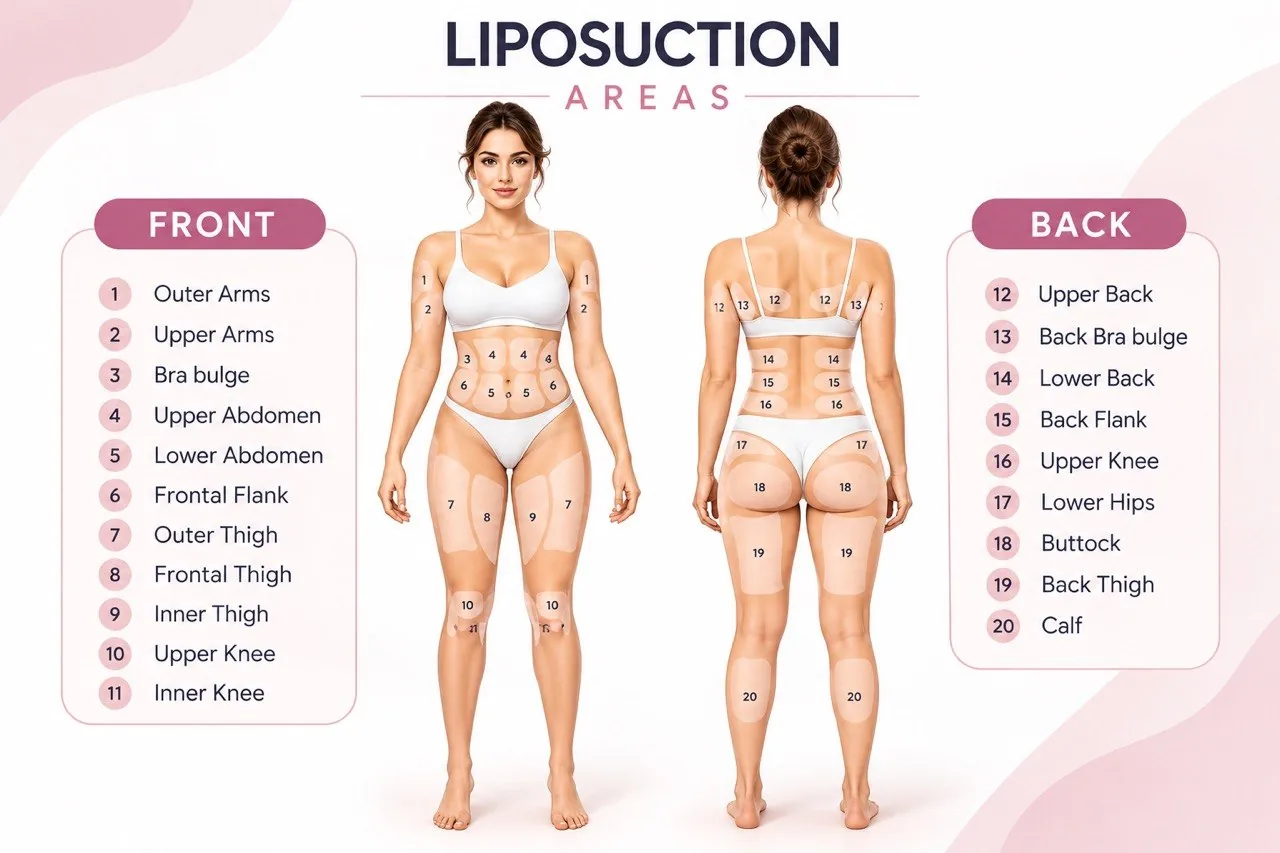
Abdominal Liposuction
One of the most commonly requested areas, targeting fat around the stomach for a flatter, more defined midsection.
Waist and Flank Liposuction
Removes fat from the sides of the torso to create a more defined waistline.
Thigh Liposuction
Addresses fat on the inner or outer thighs, improving the overall leg contour.
Arm Liposuction
Reduces excess fat along the upper arms, a common concern for patients who struggle with this area despite exercise.
Back Liposuction
Targets fat around the bra line and lower back, areas that are often resistant to diet and exercise.
Chin and Neck Liposuction
Refines the jawline and neck profile by removing localised fat deposits.
Male Chest Liposuction (Gynecomastia)
Treats enlarged male breast tissue caused by excess fat, helping to create a flatter, more contoured chest.
Who Is a Good Candidate for Liposuction?
Ideal Candidates
Good candidates are generally in good overall health, close to their ideal body weight, and have localised fat deposits that have not responded to diet and exercise. Realistic expectations and good skin elasticity also support better outcomes.
Medical Conditions That May Affect Eligibility
Certain conditions, such as uncontrolled diabetes, heart disease, or blood clotting disorders, may increase surgical risk and require further evaluation before proceeding.
When Is Liposuction Not Recommended?
Liposuction is generally not recommended for patients who are significantly overweight, pregnant, or have serious unmanaged health conditions. A thorough medical assessment is essential before any decision is made.
How Is Liposuction Surgery Performed?
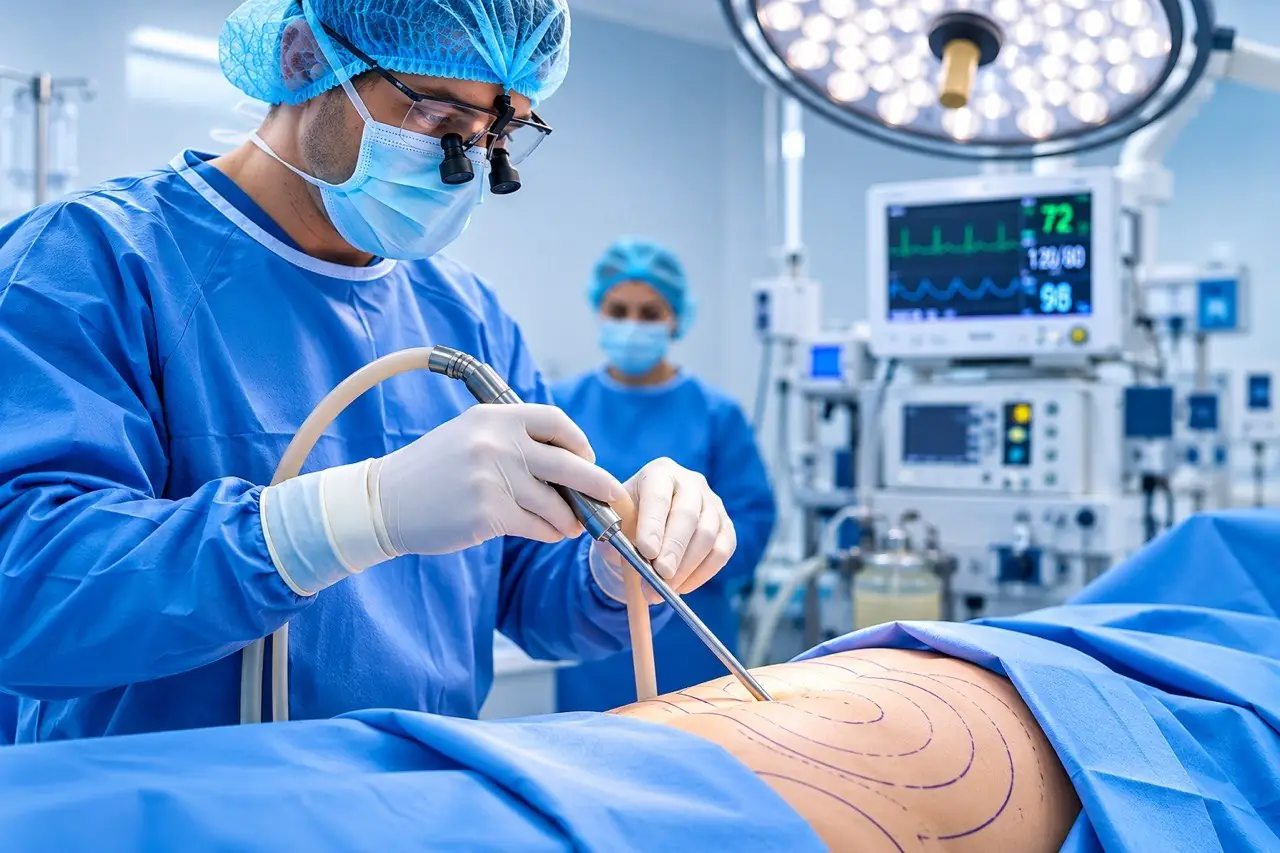
Initial Consultation and Medical Assessment
The process begins with a consultation where the surgeon reviews the patient’s health history, examines the treatment areas, and discusses goals and expectations.
Preoperative Tests and Preparation
Standard blood tests and other medical evaluations are usually required to confirm the patient is fit for surgery.
Anesthesia Options
Depending on the extent of the procedure, liposuction may be performed under local anaesthesia with sedation or general anaesthesia.
The Surgical Procedure
Small incisions are made in the treatment area, through which the surgeon inserts a cannula to break up and remove fat. The procedure typically takes one to three hours, depending on the number and size of areas treated.
Postoperative Care
After surgery, patients are monitored during an initial recovery period before being discharged with aftercare instructions, including wound care and activity guidance.
Benefits and Potential Risks of Liposuction
Potential Benefits of Liposuction
Liposuction can improve body proportions, boost self-confidence, and provide long-lasting contouring results when combined with a stable weight and healthy lifestyle.
Possible Complications and Side Effects
As with any surgery, liposuction carries risks, including swelling, bruising, infection, uneven contours, and in rare cases, more serious complications. Discussing these risks thoroughly with the surgeon beforehand is essential.
How to Reduce Surgical Risks
Choosing an experienced, board-certified plastic surgeon, following preoperative instructions carefully, and disclosing full medical history all help reduce the likelihood of complications.
Importance of Choosing a Qualified Plastic Surgeon
The surgeon’s qualifications and experience directly affect both safety and aesthetic outcomes. International patients should verify credentials and ask to see before-and-after examples of previous work.
Featured Liposuction and Body Contouring Surgeon in Iran: Dr H. Vafaei
Dr H. Vafaei is an experienced plastic surgeon in Iran, recognised for his work in liposuction and body contouring procedures. With more than 15 years of professional experience, he has developed expertise in helping patients address localised fat deposits and achieve more balanced body proportions.
His expertise extends beyond conventional liposuction. He also performs fat-removal and body-contouring procedures targeting different areas of the body, including the abdomen, waist, flanks, thighs and other areas where stubborn fat deposits may persist despite diet and exercise. Each treatment is planned according to the patient’s individual anatomy, aesthetic goals and medical suitability.
Areas of Expertise
Dr Vafaei’s body-contouring procedures may include:
- Abdominal liposuction: Removal of localised fat deposits around the abdomen to create a flatter, more defined abdominal contour.
- Waist and flank liposuction: Treatment of excess fat around the waist and sides to improve overall body proportions.
- Thigh liposuction: Reduction of stubborn fat deposits in selected areas of the thighs.
- Multiple-area liposuction: Treatment of more than one body area where clinically appropriate.
- Body contouring: Personalised procedures designed to refine body shape and improve overall contour.
Personalised Treatment and Surgical Facilities
A key part of Dr Vafaei’s approach is selecting the appropriate treatment setting according to the complexity of the procedure and the patient’s individual needs.
For suitable minor procedures, treatment may be carried out at his clinic, subject to the required medical assessments, facility standards and safety arrangements. More extensive liposuction and body-contouring procedures are performed at Trita Hospital, where patients may require an overnight stay for post-operative monitoring and care.
Why Consider Dr H.Vafaei?
With over 15 years of experience, Dr Vafaei offers patients access to specialised plastic surgery and body-contouring services in Iran. His work encompasses liposuction as well as targeted fat removal from different areas of the body, including the abdomen.
For international patients considering treatment in Iran, Medipars can help coordinate the consultation process, provide information about treatment arrangements and assist with the practical aspects of their medical journey.
Important: The most appropriate procedure, treatment location and recovery plan are determined following an individual medical assessment. Results vary between patients, and liposuction is a body-contouring procedure rather than a treatment for weight loss.
Book an Initial Liposuction Consultation
Contact Medipars to discuss your body-contouring goals and explore liposuction treatment options with Dr. H. Vafaei in Tehran, Iran.
Liposuction Recovery and Results
First 24–48 Hours After Surgery
Patients typically experience swelling, bruising, and discomfort in the treated areas, which is managed with prescribed pain relief and rest.
First Week of Recovery
Most patients can return to light daily activities within a few days, though strenuous exercise and heavy lifting should be avoided.
Wearing Compression Garments
Compression garments are usually worn for several weeks after surgery to reduce swelling and support the skin as it adapts to the new contour.
Returning to Normal Activities
Light activities can often resume within a week or two, while more strenuous exercise is usually reintroduced gradually over four to six weeks, based on the surgeon’s guidance.
When Will Final Results Be Visible?
Initial improvements are visible once swelling subsides, but final results typically take a few months to fully emerge as the body settles.
Long-Term Results and Weight Management
Liposuction results can be long-lasting if the patient maintains a stable weight through a balanced diet and regular exercise, since remaining fat cells can still expand with weight gain.
Travelling to Iran for Liposuction Surgery
Travelling to Iran for liposuction involves considerably more than selecting a surgeon and booking a procedure. International patients need to arrange an initial medical assessment, review their treatment options, coordinate hospital admission, and plan both their recovery and follow-up care before returning home. The process typically includes submitting medical photographs and history for an initial remote assessment, attending an online consultation with a qualified plastic surgeon, completing preoperative tests, undergoing surgery, and attending postoperative follow-up appointments before travel. Accommodation, local transfers, and interpretation services also require careful planning, particularly for patients who are unfamiliar with the country. Patients should not book their return flights until they have received explicit medical clearance from their surgeon, as flying too soon after surgery carries a recognised risk of blood clots. Medipars helps international patients coordinate each of these stages — from the first enquiry through to post-operative follow-up — by facilitating communication with surgeons and hospitals in Iran and providing practical support throughout the medical journey.
- Submit medical photos and history: Share photographs of the areas you wish to treat, along with your medical history, current medications, and any relevant test results, through a secure channel for an initial remote assessment.
- Online consultation with a plastic surgeon: Attend a video consultation with a qualified surgeon in Iran to discuss your suitability for liposuction, the available techniques, expected results, and an indicative cost estimate.
- Hospital admission and surgery planning: Once a preliminary treatment plan is agreed, confirm the surgeon and hospital, complete preoperative tests, meet the anaesthesiologist, and schedule your admission and procedure.
- Accommodation and transportation: Arrange suitable accommodation close to the hospital, along with airport transfers and local transport between your hotel, clinic, and hospital throughout your stay.
- Postoperative follow-up before returning home: Attend all required follow-up appointments so the surgeon can assess your recovery, review wound healing, provide compression garment guidance, and confirm you are ready to travel.
- Obtain medical clearance before flying: Do not book your return flight until your surgeon has explicitly confirmed it is safe to fly — travelling too soon after surgery carries a recognised risk of blood clots.
Before leaving Iran, patients should attend all required follow-up appointments so their surgeon can assess wound healing, check for any early complications, and confirm that recovery is progressing as expected. Flying home without explicit medical clearance from the treating surgeon is not advisable, as travelling too soon after surgery carries a recognised risk of blood clots — particularly following abdominal or extensive procedures. Recovery time varies considerably depending on the areas treated, the surgical technique used, and each patient’s individual health and healing response, so return travel should only be booked once the surgeon has confirmed it is safe to do so. Patients are also strongly encouraged to arrange appropriate follow-up care with a healthcare professional in their home country before they travel, so that any concerns arising after they return — such as swelling, wound issues, or other postoperative complications — can be assessed and managed promptly.
Frequently Asked Questions About Liposuction in Iran
Iran is a well-established medical tourism destination for cosmetic surgery, offering experienced surgeons and modern facilities, which makes it a viable option for international patients seeking liposuction.
Indicative 2026 prices range from about $800 for double chin liposuction to $4,800 for Lipo 360 with a tummy tuck. The final cost depends on the technique used, the number of body areas treated, and the clinic chosen, so patients should request a personalised quote based on their specific case.
Liposuction in Iran can be safe when performed by a qualified, experienced plastic surgeon in an accredited facility. Patients should verify the surgeon’s credentials and the clinic’s safety standards before proceeding.
Most patients are advised to stay in the country for at least one to two weeks after surgery to allow for initial recovery and follow-up checks before travelling home.
Discomfort following liposuction is generally manageable with prescribed pain medication, and most patients describe the sensation as soreness rather than severe pain.
Liposuction permanently removes the fat cells from the treated area. However, remaining fat cells elsewhere in the body can still grow if the patient gains significant weight afterwards.
Yes, abdominal liposuction is one of the most requested procedures and can effectively reduce stubborn fat around the stomach area.
Liposuction removes excess fat, while a tummy tuck (abdominoplasty) also removes excess skin and tightens the abdominal muscles. Patients with loose skin may need a tummy tuck in addition to, or instead of, liposuction.
Yes, surgeons often treat multiple areas during a single session, provided the total volume of fat removed stays within safe limits for the patient’s health.
Most surgeons recommend waiting at least one to two weeks before flying, to reduce the risk of blood clots and allow initial healing. This timeline should always be confirmed with the treating surgeon.
Get a Liposuction Consultation in Iran with Medipars
Choosing where to have liposuction is a significant decision, especially when travelling from abroad. Medipars supports international patients throughout the entire process, from the first enquiry to post-operative follow-up, by coordinating medical consultations, travel logistics, and communication with qualified plastic surgeons in Iran.
If you are considering liposuction in Iran, submit your medical information to Medipars today to receive an initial consultation with a qualified plastic surgeon and take the first step towards a personalised treatment plan.
Sources
- NHS: Liposuction
- NHS: Cosmetic surgery abroad
- American Society of Plastic Surgeons: Liposuction candidates
- American Society of Plastic Surgeons: Fat cells don’t return to treated or untreated areas after liposuction
- The Aesthetic Society: Liposuction aftercare and recovery
Written by: Medipars Medical Content Team.
Medically reviewed by: Dr H. Vafaei, board-certified plastic surgeon. Last medically reviewed: 9 November 2026.
